
 Türkçe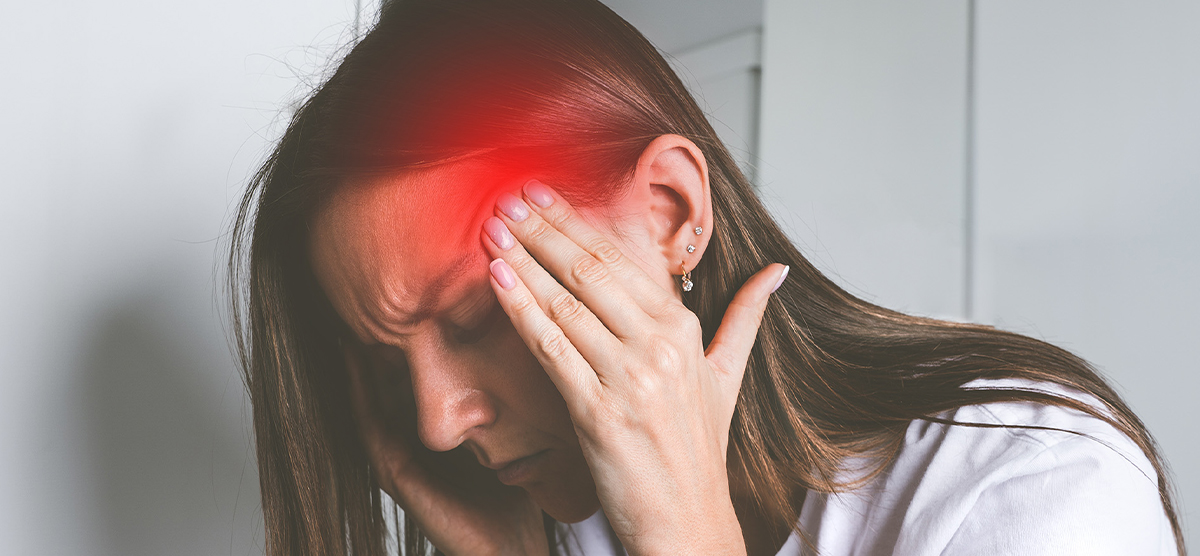
Among headache disorders, frequently encountered but often underestimated headache attributed to external pressure is a special headache type that occurs as a result of mechanical pressure applied to the head. This type of headache develops as a result of pressure caused by tight hats, helmets, bandanas, hair clips, or headgear. Headache attributed to external pressure, although generally appearing simple and harmless, can significantly affect quality of life when it becomes chronic.
Headache attributed to external pressure is among the new headache types brought by modern life and is seen more frequently especially in people working in certain professions. Situations such as construction workers’ helmet use, security guards’ hat wearing, hair stylists’ use of tight clips prepare the ground for this type of headache. Correct recognition of headache attributed to external pressure and taking appropriate measures can provide simple but effective solutions that increase patients’ comfort.
Headache Attributed to External Pressure
Headache attributed to external pressure is a headache type that appears in the primary headaches category in the International Classification of Headache Disorders (ICHD-3), occurring as a result of continuous mechanical pressure applied to the head. This condition develops as a result of localized pressure created on the skull by any headgear, accessory, or external object.
The fundamental feature of headache attributed to external pressure is that pain appears only in the region where pressure is applied and passes quickly when the pressure source is eliminated. This pain is generally mild-moderate in severity and is described by the patient as pressure sensation, tension, or compression. The character of pain is generally continuous and non-throbbing type.
The pathophysiology of this headache type is relatively simple. External pressure irritates soft tissues, muscles, and nerve endings on the skull. Especially when branches of the trigeminal nerve and occipital nerves are under pressure, pain signals are transmitted to the brain. Prolonged pressure can also affect regional blood circulation, triggering ischemia and inflammatory process.
Headache attributed to external pressure is generally evaluated within the scope of occupational disease. Those working in professions such as construction sector, security services, military personnel, athletes, and hair stylists constitute a high-risk group. Additionally, it can also be seen in people who continuously use headscarves, turbans, or hats for cultural or religious reasons.
Diagnostic criteria are quite clear and the temporal relationship between pain and pressure source identification must be demonstrated. Pain generally starts within 1 hour after pressure is applied and passes within 1 hour after pressure is removed. This characteristic feature provides an important clue in distinguishing it from other headache types.
The prognosis of headache attributed to external pressure is excellent because pain completely improves when the pressure source is eliminated. However, in case of chronic exposure, hypersensitive (hyperesthetic) areas can develop in the skin and even light touches can become headache triggers.
Causes of Headache Attributed to External Pressure
Causes of headache attributed to external pressure are quite diverse and are related to objects and situations we frequently encounter in daily life. Knowing these causes is important both for taking precautions and determining treatment approach.
Occupational causes are the most common sources of headache attributed to external pressure. Long-term use of construction helmets, especially tightly adjusted or inappropriately sized helmets create continuous pressure. Security guards’ hats, military berets and caps, miner helmets can cause similar effects. Firefighter helmets, motorcycle helmets, and bicycle helmets are also evaluated in the same category.
Equipment used during sports activities constitutes an important cause group. Football helmets, baseball caps, swimming caps, diving masks, and ski helmets can cause pain when applying pressure. Especially continuous use of this equipment during long-duration training or matches can become problematic.
Headgear used for cultural and religious reasons can also create headache attributed to external pressure. Tightly tied headscarves, turbans, keffiyehs, and traditional headgear cause pain when applying continuous pressure. Especially very tightly tied or heavy fabric headscarves are problematic.
Hair accessories and styling products are important cause sources. Tight hair clips, bandanas, hair bands, hair rollers, and extension weight apply pressure to the scalp. Especially heavy earrings, large hair clips, and tight ponytails worn for long periods lead to similar effects.
Eye correction tools can also be pressure sources. Tight eyeglass frames, especially heavy frames pressing on the nose and temple area, sunglasses, and protective glasses can create pain with long-term use. Virtual reality glasses and 3D glasses also cause the same problem.
Medical devices and treatment tools can also create headache attributed to external pressure. CPAP masks, oxygen masks, anesthesia masks, and medical bandages create pressure with continuous use. This problem is frequently encountered especially during long-term hospital stays.
Fashion accessories and decorative objects can also be causes. Heavy earrings, voluminous hair decorations, fancy hats, and costume pieces create pain especially when worn for long periods on special occasions. Wedding hairstyles and headgear used in ceremonies can also be problematic.
Environmental factors can affect the development of headache attributed to external pressure. Materials that swell in hot weather conditions create more pressure. In environments with high humidity, fabric and leather materials can shrink, increasing pressure. Thick hats and beanies used in cold weather also show similar effects.
Anatomical factors can create individual predisposition. Skull shape, hair density, skin sensitivity, and previously experienced head traumas affect tolerance to pressure. In the elderly, sensitivity to pressure may increase due to skin atrophy.
What are the Symptoms of Headache Attributed to External Pressure?
Symptoms of headache attributed to external pressure show characteristic features and are generally directly related to the localization of the pressure source. Correct recognition of these symptoms is critically important both in making a diagnosis and determining the appropriate treatment approach.
Pain localization is the most distinguishing feature of headache attributed to external pressure. Pain appears directly under the region where pressure is applied and generally remains limited to this area. When a hat is worn, pain is felt around the forehead, when a helmet is used, at the top of the head, when a tight clip is worn, localized pain is felt along the hairline. This localization feature provides an important clue in distinguishing it from other headache types.
Pain character is generally described as pressure sensation, compression, or tension. Patients describe this as “as if squeezing my head,” “as if something heavy is placed on me,” or “as if my head is squeezed in a vise.” Pain is not throbbing in character, it shows continuous and constant characteristics.
Pain severity generally progresses at mild-moderate level. In 80% of patients, pain severity is measured at values between 3-6 out of 10. However, in case of very tight or prolonged pressure, severity can increase and affect daily activities. Pain intensity shows variability parallel to the intensity and duration of pressure.
Temporal relationship is the most characteristic feature of headache attributed to external pressure. Pain generally starts 30-60 minutes after application of the pressure source. In some sensitive individuals, this period can shorten to 15 minutes. After the pressure source is removed, pain generally completely disappears within 15-60 minutes.
Accompanying symptoms are generally at minimal level. Migraine symptoms such as nausea, vomiting, light-sound sensitivity are not seen in headache attributed to external pressure. However, local sensitivity, redness, and swelling can develop in the pressure area. Marking in the area and temporary color change can be observed after prolonged pressure.
Triggering factors are specific and directly related to the pressure source. Pain recurs when the same hat is worn, the same clip is used, or working in the same position. This predictable character provides an important clue in disease diagnosis.
Daily life effects are limited in headache attributed to external pressure. Generally, patients can continue their normal activities, but experience discomfort in situations where they have to use the pressure source. Decrease in work performance, limitation in social activities, and aesthetic concerns can be seen.
Changes that can develop in chronic exposure are important. When pressure is continuously applied to the same area, that area can become hypersensitized and pain can be felt even with normal touches. Hair loss, permanent marks on skin, and local atrophy can develop. Hair shedding can be seen especially with long-term use of tight hair clips.
Positional changes can affect pain. Pain can increase with forward bending of the head, lying sideways, or sudden movements. Especially with heavy pressure sources like helmets, it can cause contraction and tension in neck muscles, leading to pain spreading to the neck region.
Psychosocial effects should not be underestimated. Especially pressure sources affecting appearance (hat mark, messy hair) can create social anxiety. Work stress may increase in people with helmet use obligation in work life and performance may be affected.
Individual variations are important. While some people are more tolerant to pressure, some can feel pain even at very small pressures. Age, gender, hair structure, skin thickness, and general health status are factors affecting individual sensitivity.
International Classification of Headache Disorders (ICHD-3) Diagnostic Criteria – 4.6 Headache Attributed to External Pressure on the Head
Diagnostic Criteria:
A. Headache must be related to external pressure as defined by criterion C.
B. Headache occurs as a result of external pressure applied to the head or neck region.
C. Both of the following demonstrating causation must be present:
1. Headache starts within 1 hour after application of external pressure.
2. Headache resolves within 1 hour after removal of pressure.
D. Headache is not better accounted for by another ICHD-3 diagnosis.
Explanation:
- This headache is generally related to localized external pressure created by a hat, helmet, face mask, tight glasses, hair band, or tight accessory.
- When pressure is removed, pain quickly disappears.
- Typically, pain is dull, pressure-type, and localized at the pressure point.
- Long-term or repetitive pressure exposure may cause headache to last longer.
Treatment of Headache Attributed to External Pressure
Treatment of headache attributed to external pressure generally includes simple and effective approaches. The basic principle is elimination or modification of the pressure source. In most cases, this approach is completely successful and provides significant relief to patients.
Elimination of pressure source is the most effective method of headache attributed to external pressure treatment. When possible, taking a break from or completely stopping use of the pressure-creating object is recommended. Loose hair bands instead of tight clips, light models instead of heavy hats, appropriate-sized ones instead of tight helmets should be preferred.
Pressure modification offers practical solutions. Pressure distribution can be improved by adding soft padding materials inside helmets and hats. Use of silicone or sponge pads reduces pressure points. Making correct size adjustment in adjustable helmet systems is critically important.
Usage duration modification is an effective strategy. By giving regular breaks instead of continuous use, pressure effect is reduced. Taking 10-15 minute breaks per hour, making different position changes, and massaging the pressure area are beneficial. Break planning should be done in situations requiring work safety.
Alternative product selection is an important treatment approach. Products made from lighter materials, models with adjustable features, and alternatives produced with ergonomic design principles should be preferred. Especially in occupational use, ergonomics expert recommendations can be obtained.
Local treatment methods provide symptomatic relief. Cold compress application to the pressure area reduces inflammation. Light massage improves blood circulation after pressure. Use of menthol-containing topical creams can provide local analgesic effect.
Pharmacological treatment is generally not necessary. In severe pain situations, simple analgesics (paracetamol, ibuprofen) can be used. However, these medications provide temporary relief as long as the pressure source continues. Anti-inflammatory topical creams can be applied locally.
Protective measures provide long-term solution. Appropriate size and model selection, quality material preference, development of regular usage habits, and research of alternative solutions are important. Especially in mandatory use for occupational reasons, solution seeking can be done with the employer.
Hair and skin care provides supportive treatment. Meeting moisture and nutrition needs of hair in the pressure area, using moisturizer for skin to gain elasticity are beneficial. Especially people using tight clips can use hair masks and skin care products.
Lifestyle modifications provide holistic approach. Improving general health status, regular exercise, stress management, and nutrition regulation can increase tolerance to pressure. Additionally, posture-correcting exercises can reduce the effect of heavy headgear by strengthening neck and shoulder muscles.
Education and awareness raising is an important treatment component. Especially in occupational groups, training should be provided on correct usage techniques, risk factors, and protective measures. Employers and employees should be informed on this subject.
Follow-up and monitoring process increases treatment success. Evaluating pain status after pressure modification, taking additional measures when necessary, and evaluating long-term effectiveness are important. Headache attributed to external pressure is generally a condition that can be completely controlled with simple measures, and patients experience great relief with these simple changes.
Is There a Relationship Between External Pressure-Related Headache and Migraine?
Research shows that people with migraine may be more sensitive to external pressure-related headache. In migraine patients, nerves carrying pain signals in and around the scalp are more sensitive (this condition is called “central sensitization”). Therefore, pressure applied to the head – for example, hat, helmet, face mask, glasses, or hair band – can lead to faster and more severe headache compared to people without migraine.
Additionally, external pressure-related headache can trigger a migraine attack in some people. This is especially important in professions requiring use of tight headgear, face masks, or helmets (e.g., healthcare workers, soldiers, cyclists). If this type of pressure-related headache triggers migraine attacks, taking measures to reduce pressure or using alternative equipment can provide benefit in migraine control.
